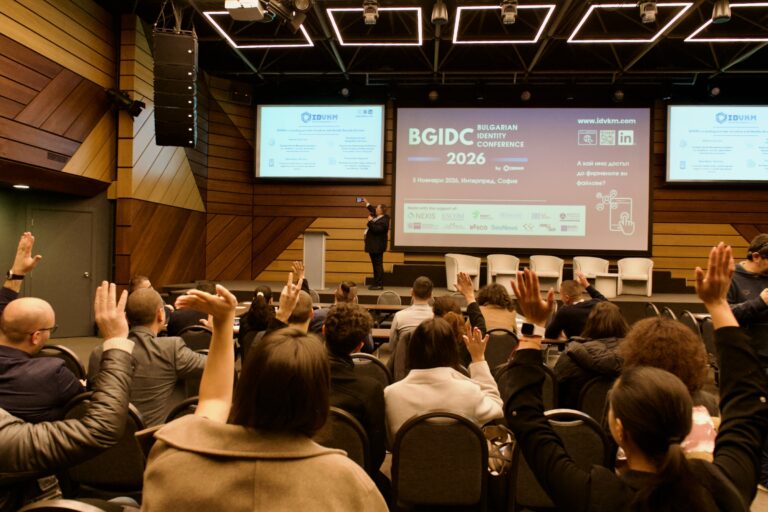
Digital identity management has become one of the most important elements of cybersecurity, and organizations are faced with the need to control not only human, but also the growing number of machine and AI-based identities. Non-human identities require clearly defined rights, traceability and periodic review of permissions. Unused accounts, uncontrolled work profiles and excessive privileges can remain active and create the prerequisites for unauthorized access. Identity Governance and Administration (IGA) solutions as part of Identity and Access Management (IAM) solutions allow these permissions to be tied to specific roles and tasks, actions to be tracked and unnecessary privileges to be revoked. This is also important during personnel changes, when the access of employees who have left or have moved to another position must be updated in a timely manner. This was the main focus of the opening of the Bulgarian Identity Conference, which took place on November 5 at Interpred and was organized by the consulting company IDVKM.
In his opening remarks, Ivan Pepelov, CEO of IDVKM, shared that the modern business environment puts companies under increasing pressure from regulations such as NIS2 and DORA, which transforms access and identity management from a technological function into a strategic necessity. Pepelov emphasized that digital identity is emerging as a key factor for security, compliance with regulatory requirements and sustainable development of organizations.
It is in this context that Bulgaria is taking the next step towards building a more sustainable national cyber defense.
Common infrastructure for monitoring and protecting state administration
In his presentation “From Institutional Cybersecurity to National Cyber Resilience”, Velizar Varbanov presented Bulgaria’s strategic transformation towards an integrated national cyber defense model. Emphasis was placed on building a common picture of cyber threats, coordinated incident response, and the use of artificial intelligence for proactive threat detection and analysis. Special attention was paid to the implementation of the NIS2 Directive as a tool for increasing the cyber resilience of critical sectors and strengthening the accountability of organizations. The presented vision until 2030 envisages closer cooperation between state institutions, businesses, and European partners in order to build a sustainable and coordinated national cyber defense.

Customer’s voice with the real stories of the business
The first panel of the conference shared the customer perspective – application managers in large corporations and consultants presented current topics.
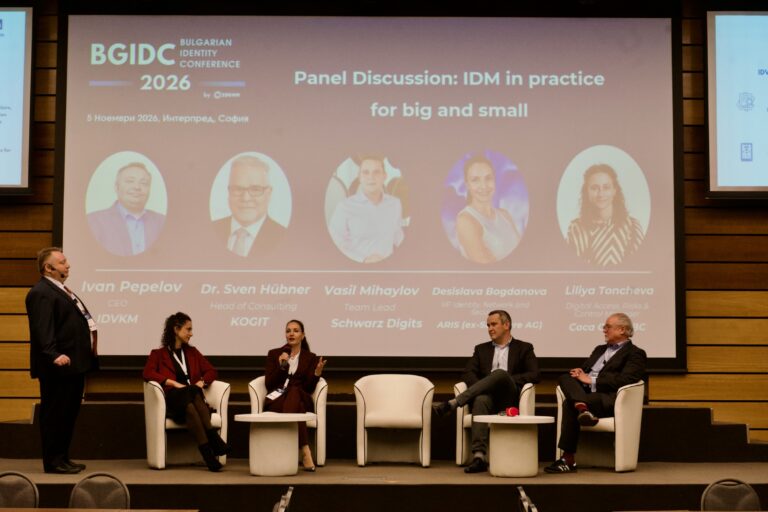
Among the speakers were Liliya Toncheva, Risk and Control Manager at Coca-Cola HBC, whose presentation placed the human factor in the complex IAM system, in which Identity is a management model, not just a control system. The inclusion of AI agents does not create the problem of IAM clarity, but only emphasizes it, confirming that the maturity of the digital ecosystem requires clarity.
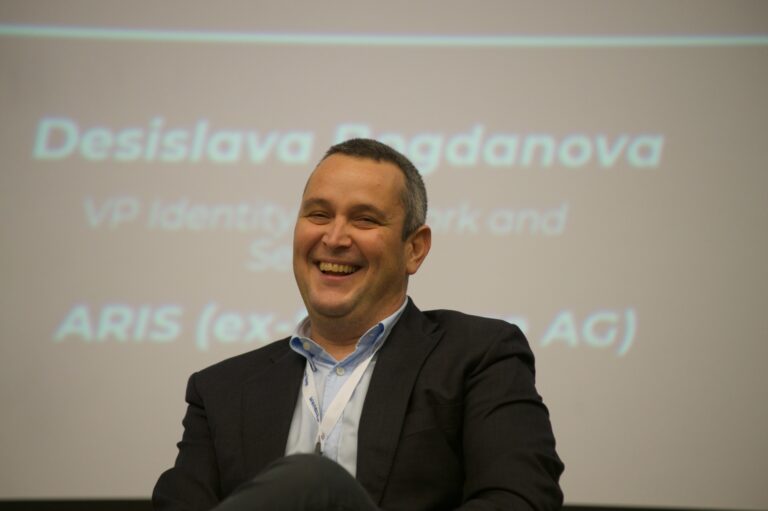
Desislava Bogdanova, Vice President Identity, Networks and Security at ARIS, showed a real example from the separation of the former Software AG, in which the IAM system was the connecting link between business applications, security systems and the administrative organization and led the company through this general transformation, accompanied by uncertainty, lack of information and communication.
Vasil Mihaylov from Schwarz Digits presented Identity Fabric as a comprehensive solution combining various aspects of Identity Management systems, unifying cloud and on-premises functions and providing more flexibility for both large corporations and start-ups.
International consultant Dr. Sven Hübner from KOGIT presented the Causal Loop Diagram (CLD) and its application in Identity Security. CLD is a system thinking tool that visualizes how different factors influence each other and create feedback loops. These loops can be reinforcing, when a given change leads to its further reinforcement, or balancing, when the system counteracts the change and strives for stability. In the context of Identity Security, such a diagram shows how identity and access management, privileges, risks and control mechanisms interact and affect the overall level of security.
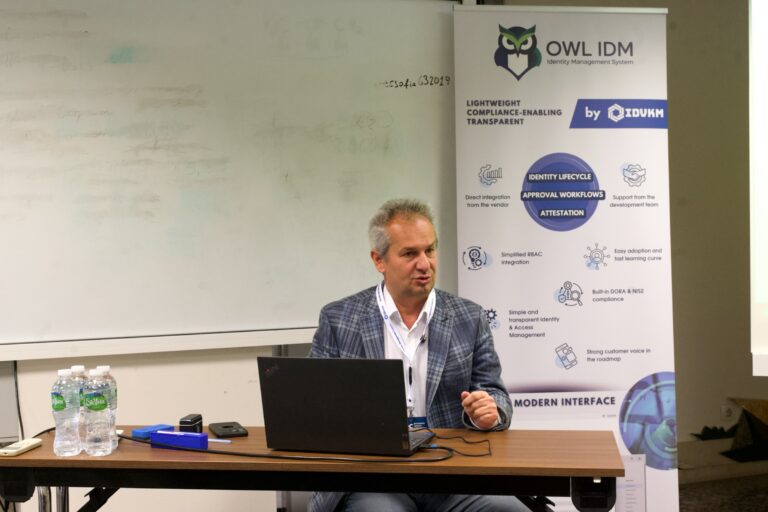
Ivan Pepelov and Valentin Hristov from IDVKM compared the needs of small and large companies in the areas of compatibility, cybersecurity and business automation, presenting the company’s specialized solution – Owl IDM – introducing the topic of identity management as a solution for organizations of different sizes and aimed in particular at small and medium-sized businesses falling under the regulatory requirements of NIS2 and DORA.
The conference continued with four parallel tracks, examining important aspects of identity management and the regulatory framework in which they fall.
As expected, the first parallel stream focused on Artificial Intelligence and showed both its integration into the existing ecosystem for digital identities, and how important it is not to miss the so-called “human in the loop” – the role of a specific person as responsible for the actions of AI agents and placing them within specific frameworks.

AI Track
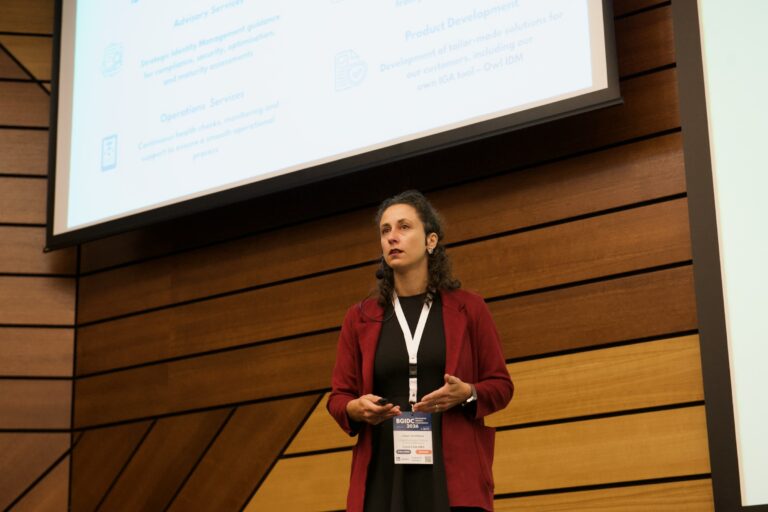
This block of presentations presented illustrative examples of how artificial intelligence can be integrated into business processes to increase their efficiency. However, along with the possibilities, the speakers also emphasized the need to build clear procedures for management, control and traceability, as well as the creation of a specific digital identity for each AI agent – an identity that is under human control and subject to targeted management. Realistic scenarios for critical incidents that can occur with improper implementation and management of AI agents were also considered.
Ivan Pepelov presented a new integration developed by IDVKM, which allows AI to initiate key operations in One Identity Manager, through a specially written MCP (Model Context Protocol) server based on user-defined prompts. The demonstration was supplemented with specific examples of how AI agents can be properly integrated into an organization’s Identity Management ecosystem without compromising security and access control.
In their presentations, “How NOT to Get Hacked by Your AI Agent” Martin Kuvandzhiev, CEO of encorp.ai, and “Governing AI Agents as Identities: From Visibility to Compliance” Dr. Sasha Kern from Nexis presented practical scenarios illustrating the potential risks of using AI agents, as well as approaches and solutions for their effective management and protection. (Read more.)
Kalin Primov set the broader framework of the discussion by presenting basic principles and good practices for managing Non-Human Identities (NHI). He emphasized that the challenges associated with managing digital identities are far from limited to AI agents, but encompass the entire ecosystem of non-human identities in modern organizations – from service accounts and applications to automated systems and AI solutions.
Cybersecurity Track
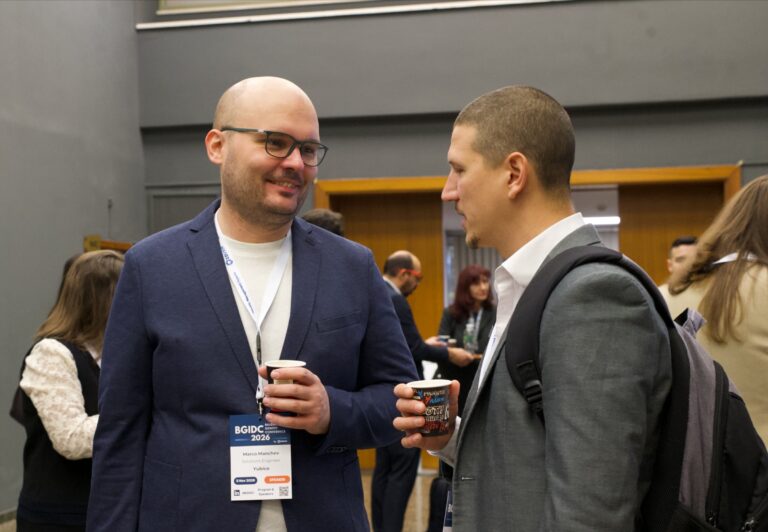
This parallel track began with a presentation by Marko Manchev, Yubico of a new technology YubiKey as a Service for passwordless authentication, which nevertheless follows Zero Trust principles. Ivan Denchev, Versasec explained how such technology fits into the overall cybersecurity system, using the modern FIDO2 standard
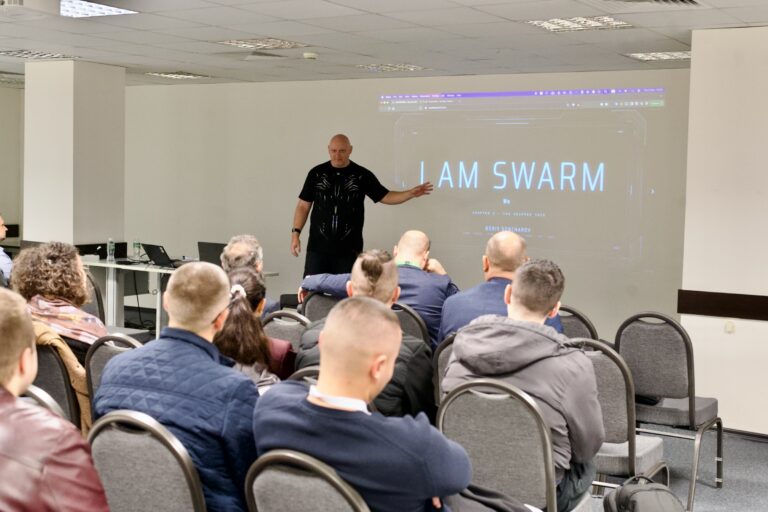
Boris Goncharov demonstrated how a “swarm” of AI agents manages to take over a vibe-coded e-commerce site. The analogy with the popular game from the past is not accidental, where arthropod-like zergs organize themselves into such swarms, taking over other civilizations
In his presentation “Let identity contribute to your security”, Ivan Pepelov showed how the Nexis platform can connect the protection layers – layer 1 (operational management, where identity-related applications such as IGA, AM and PAM are based) and layer 2 (risk monitoring and compliance, where security-related applications such as SIEM and ITDR are based). The latter have a direct connection to the Security Operations Centre (SOC) and can trigger a real-time response
Senior Commissioner, Prof. Ilin Savov, Rector of the Academy of the Ministry of Interior, showed different models of cyber defence, such as SHIELD (Secure identity, Harden dependencies, Inspect signals, Exercise response, Limit blast radius, Design recovery), emphasizing prevention and awareness starting with each person.
Compliance Track
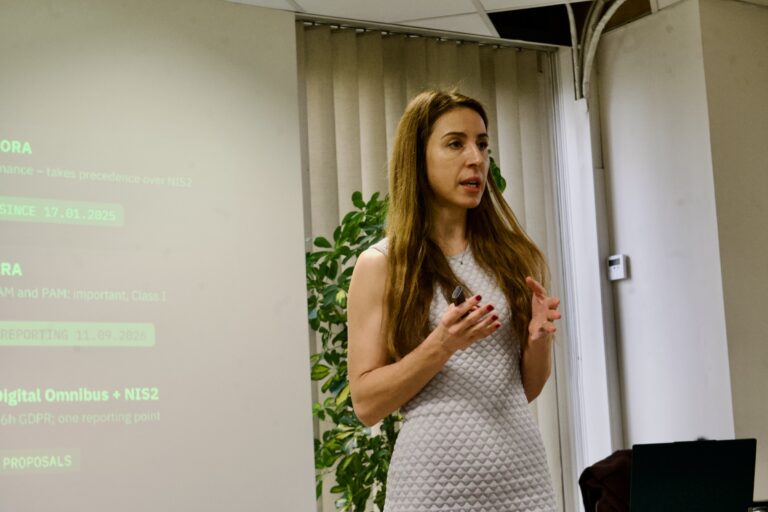
Two of the presentations in this track looked at digital identity security from two complementary perspectives – what the regulations require and how organizations can prove that they actually comply with these requirements. Irina Yaneva presented the main European regulations that affect digital identity management and access to systems – GDPR, NIS2, DORA, Cyber Resilience Act (CRA), eIDAS 2 and others. She drew attention to the fact that in the event of an incident, organizations may be required to notify different institutions within several parallel deadlines, which requires good coordination and clear internal procedures. In addition to regulatory requirements, she also pointed out some common security gaps – mandatory password changes every 90 days, weak backup methods for multi-factor authentication (MFA), insufficient protection of test environments and unprotected access recovery procedures. Practice shows that it is these seemingly minor gaps that can lead to serious financial penalties.
Yanko Spasov built on the topic with an essential question: how can we prove that security measures actually work? He emphasized that access management is not just a technical task, but a business responsibility. The fact that a given access has been officially approved does not necessarily mean that it is necessary or appropriate. Therefore, regular checks should establish not only who has access, but also whether there is still a good reason for it. According to him, real compliance with requirements is not limited to the presence of policies and successfully passed audits – it requires a clear scope of checks, documented exceptions and specific accountability.
The overall message from both presentations was clear: it is not enough for organizations to have security rules – they must be able to prove that these rules work in practice. While Irina Yaneva outlined what organizations need to build, Yanko Spasov emphasized how they can check and prove the effectiveness of the measures taken.
Rumen Valkov, Head of Legal, Regulatory Compliance and International Expansion at Rabbit Solutions, presented an interesting aspect on the topic of “Know Your Contractor” – or how identity management meets the new EU Anti-Money Laundering Regulation (AMLR, Regulation 2024/1624). Because while employees in a company undergo strict checks and their access management is documented – contractors (external consultants, employees of outsourcing providers, temporary experts) receive almost the same rights, and sometimes even administrator access to KYC or TM systems – almost without verifying the identity of the person himself. He also explained the scope of Regulation 2024/1624 – AMLR, which applies from July 10, 2027 and is a regulation, not a directive: directly applicable, without transposition and the upcoming regulatory technical standards.
Technical track
In the first presentation, Florian Slavik from Nexis demonstrated their Identity Visibility & Intelligence Platform (IVIP), which builds on a standard IAM solution by integrating AI flexibility into the authorization process. A key element is the so-called “Identity Grid”, which allows visualization of access through roles. Boyan Yanchev from LIREX BS showed a complete internal process where humans are replaced by AI agents in their roles. These AI agents respect the positions and limitations of these roles and various mechanisms ensure that they are not exceeded.
Identity Lifecycle Management is one of the most key processes in a company, regardless of its size. It describes the three phases “Joiner”, “Mover”, “Leaver”. Valentin Hristov, IDVKM showed in practice how this process is implemented with the company’s own solution “Owl IDM”.
Finally, an integration between One Identity Manager and Rabbit Solution called Identity Profiling was demonstrated. The solution helps organizations vet employees, suppliers, and subcontractors through automated checks for sanctions, politically exposed persons (PEPs), negative public information, and other risk indicators. #KnowYourContractor increases trust in a company’s subcontractors and contributes to a high level of security within it.
World Café discussions
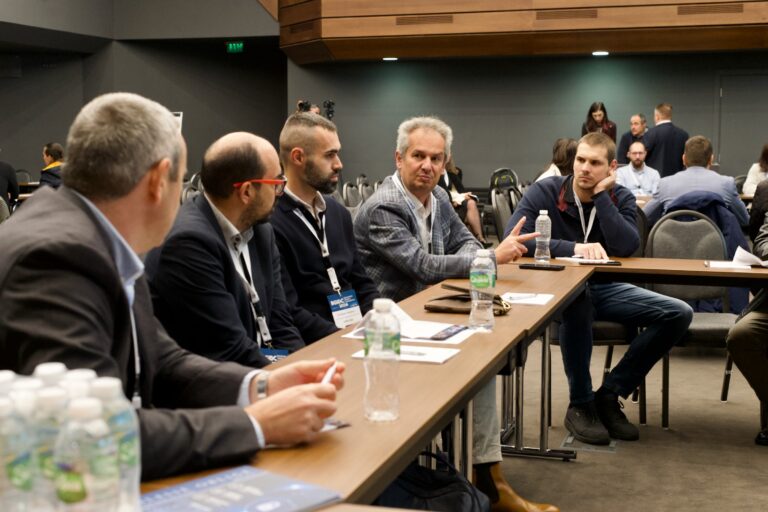
Four discussion tables with experienced moderators offered the opportunity for participants to actively engage and reflect on the following topics:
- Compliance in practice
- Drivers for new IDM developments
- IGA at scale – opportunities and challenges
- How can IAM be successfully integrated during a company merger or carve out
The format challenged participants to actively engage in discussions examining different aspects of each of the issues raised.
A strategic look into the future
The day ended with two presentations, the focus remained on the connection between identity management, artificial intelligence and cybersecurity.
Adrian Bötz and Christian Timm from Horváth, in their topic “AI Governance: Securely Steering AI Agents – How to Ensure Identity Security in the Age of AI”, unfolded the challenges of securely managing AI agents and the need for clear rules, control and protection of their digital identities.
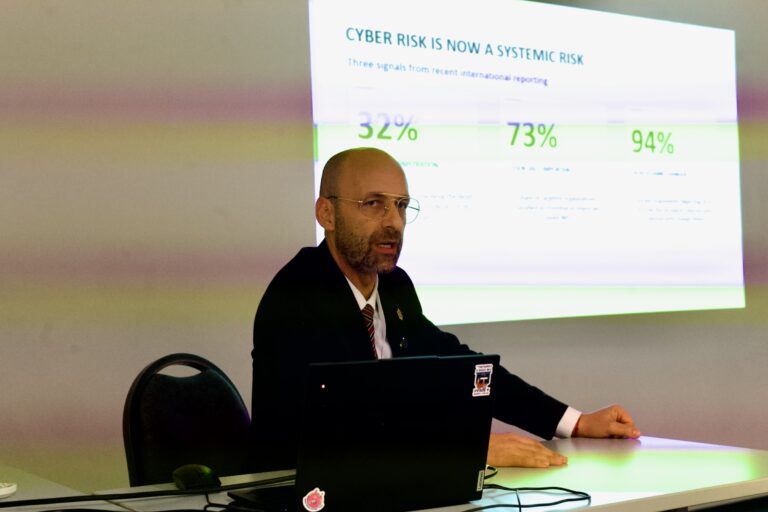
Rob Byrne from One Identity, with the presentation “Navigating Cyber Risk: Full Steam Ahead with Identity?”, drew attention to the role of identity management as a key tool for limiting cyber risk and building a more resilient information security strategy. The general message was that in the AI era, security starts with identity – regardless of whether it is a person, an application or an autonomous AI agent.
The final presentation by Ivan Pepelov compared the trends and drivers of innovation around the world and in Bulgaria. Everywhere the leading topics are AI and Compatibility, with two main topics:
- Finding and managing AI agents, in all their dimensions – first as a tool, then as an assistant, graduating into AI agents and finally into a real collaborator and colleague
- Compatibility along the supply chain, when a customer is able to request compatibility with a regulation such as MIS2 in the shortest possible time (as here incompatibility would lead to the loss of the customer)
Bulgaria is particularly affected, due to the early implementation of AI technologies and the vast majority of our exports to the EU (64%)
All topics discussed at the conference met with serious interest among the participants, where representatives of business, the public sector and international technology companies discussed how identity management is becoming a key tool for protecting organizations in the era of artificial intelligence, automation and increased regulatory requirements.




0 Comments